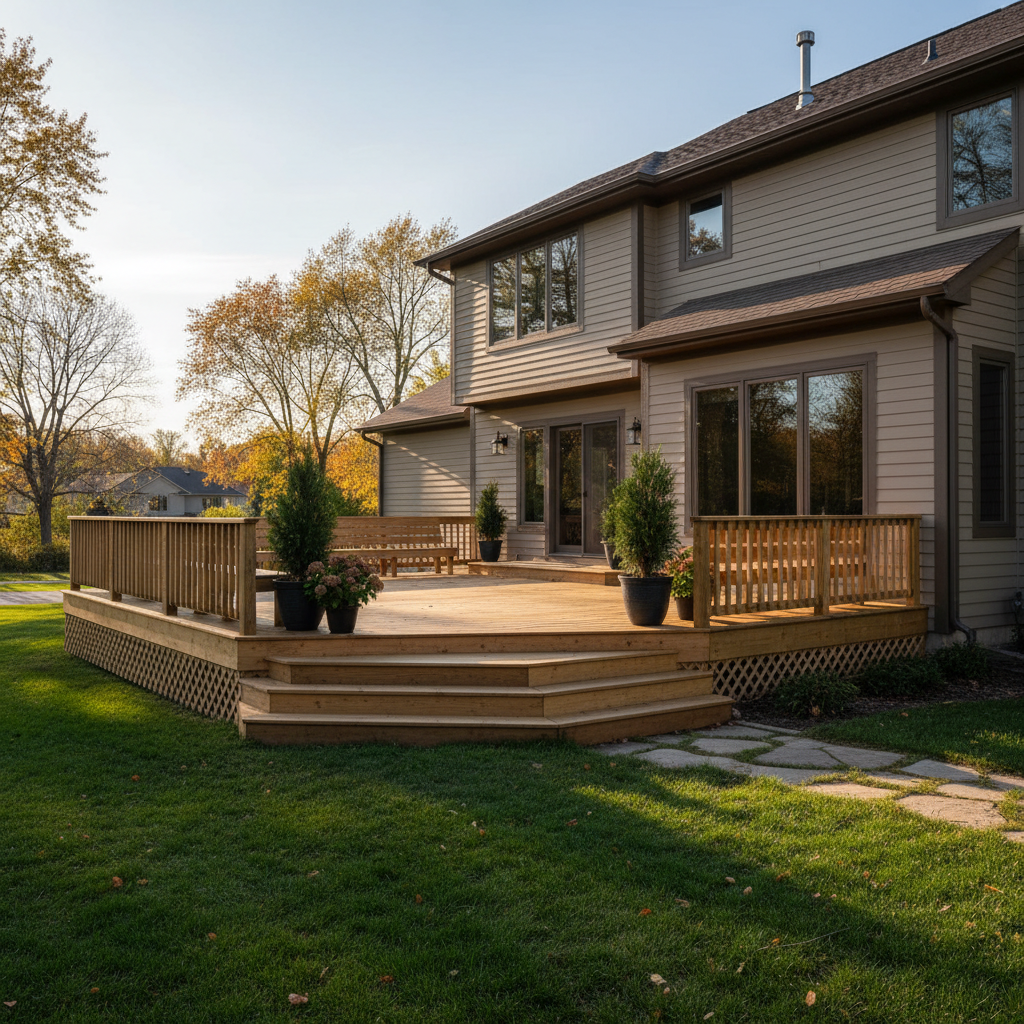
You've got a beautiful wooden deck, maybe you just had Skyline Deck Builders put it in, or maybe it's been there for years. Either way, living here in Bloomington, you know our weather isn't exactly gentle. We get the full spectrum: humid summers, freezing winters, wet springs, and crisp falls. All that takes a toll on wood. So, let's talk about how to protect your investment year-round and when's the best time to tackle deck projects.
Understanding Bloomington's Climate and Your Deck
Our climate is what we call 'continental,' which really just means extremes. Hot, cold, wet, dry – sometimes all in one week! Wood expands and contracts with temperature and moisture. That's why you see cracks, warping, and splintering if a deck isn't properly maintained. The freeze-thaw cycles we get, especially in areas like the Old Cedar Avenue Bridge neighborhood where decks might be closer to the Minnesota River's moisture, are particularly tough. Water seeps into tiny cracks, freezes, expands, and makes those cracks bigger. It's a relentless process.
When's the Best Time for Deck Work?
Timing is everything when you're thinking about building a new deck or doing major maintenance like staining or sealing. Here's my take:
Spring (Late April - Early June): This is prime time for new deck builds. The ground's thawed, but it's not brutally hot yet. We can pour footings without fighting frozen soil, and the wood has time to settle before the summer heat. If you're thinking about staining, wait until we've had a few dry, warmer days. You need consistent temperatures above 50°F for most stains to cure properly, and you definitely don't want rain for at least 24-48 hours after application.
Summer (Mid-June - August): Still good for building, but you'll want to get on our schedule early. The heat can make working conditions tougher, and lumber can be more prone to checking (small cracks) if it dries out too fast. Staining? Be careful. Direct sun on a hot deck can make the stain dry too quickly, leading to uneven patches. Try to stain in the morning or late afternoon, or on an overcast day.
Fall (September - October): This is another fantastic window for both new construction and maintenance. The air is cooler, less humid, and we often get a good stretch of dry weather. It's ideal for staining and sealing, as the wood can absorb the finish evenly without drying too fast. Just keep an eye on those overnight temperatures; you don't want a frost right after you've applied a finish.
Winter (November - March): Not ideal for building or major maintenance. The ground's frozen, and working with cold, brittle wood isn't fun or efficient. Plus, stains and sealants won't cure correctly in freezing temperatures. We use this time for planning, ordering materials, and getting ready for the next spring rush. If you're thinking about a deck for next year, winter is a great time to start talking to us at Skyline Deck Builders about designs and estimates.
Year-Round Protection: What You Can Do
Your deck needs attention more than just once a year. A little bit of care throughout the seasons goes a long way.
Clean Regularly: Don't wait for spring cleaning. Sweep off leaves, dirt, and debris regularly, especially in the fall. Piles of wet leaves can trap moisture, leading to mold, mildew, and rot. A simple broom can prevent a lot of headaches.
Check for Damage: After a big storm or a particularly harsh winter, take a walk around your deck. Look for loose boards, popped nails or screws, splinters, or signs of rot. Catching these early can prevent bigger, more expensive problems down the road. Pay attention to railings and stairs – safety first!
Power Washing (Carefully!): Every couple of years, a good power wash can remove grime and prep the surface for sealing. But be careful! Too much pressure can damage the wood fibers. Use a wide fan tip and keep the nozzle moving. If you're not comfortable, hire a pro.
Seal or Stain Annually/Bi-Annually: This is probably the most crucial step for wooden decks. A good quality sealant or stain acts as a barrier against moisture and UV rays. Depending on the product and how much sun your deck gets, you'll want to reapply every one to three years. You can tell it's time when water no longer beads up on the surface.
Snow Removal: While snow itself isn't as damaging as ice, heavy, wet snow can put a lot of stress on your deck's structure. If you've got a lot of snow, gently clear it off. Don't use a metal shovel directly on the wood; a plastic shovel or a broom is better to avoid scratching the surface.
Protect from Planters and Furniture: Don't let potted plants sit directly on the deck surface. They trap moisture underneath, leading to stains and rot. Use risers or move them around periodically. Also, consider protective pads under heavy furniture legs.
Taking a proactive approach to deck maintenance will save you money and headaches in the long run. It's not just about looking good; it's about making sure your deck is safe and lasts for decades, giving you a great outdoor space to enjoy here in Bloomington.