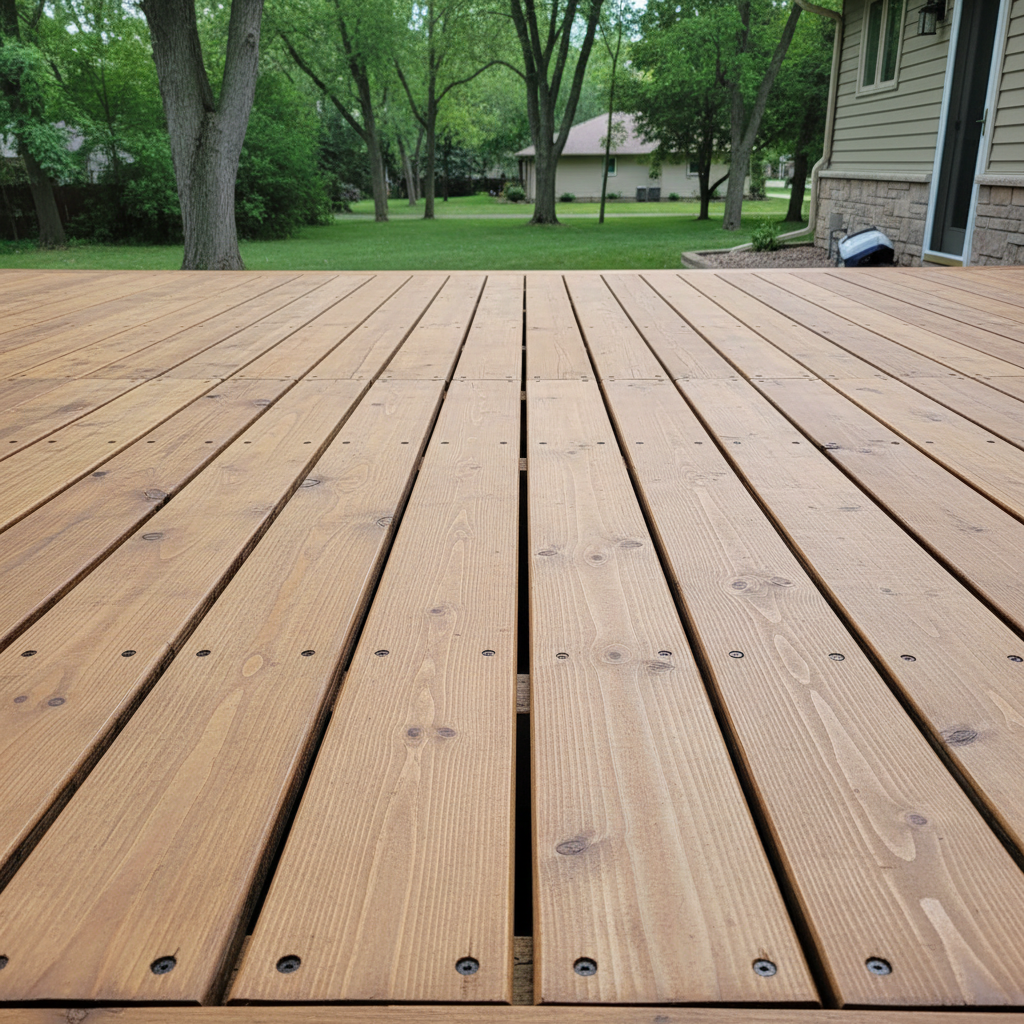
Your deck really takes a beating, doesn't it? Especially here in Bloomington, with our wild temperature swings and those heavy snowfalls. Over time, things just wear out. So, you're probably looking at your deck right now, thinking, "Can I fix that myself?" Good question. Let's talk about what's usually a good DIY project and when it's really time to call in someone like us at Skyline Deck Builders.
Before You Grab a Hammer: Check Things Out
First things first, you've gotta know what you're dealing with. Don't just jump in, okay? Walk around your deck, really look at it. What's loose? What's rotten? What just looks tired? Grab a screwdriver and poke at any suspicious-looking wood, especially around fasteners, posts, and joists. If it's soft or crumbles, that's rot, plain and simple.
- Loose railings or balusters: This one's super common. If a baluster wiggles, it might just need new screws or a little wood glue. But if the whole railing section feels unstable, that's a bigger deal.
- Wobbly steps: Steps get a ton of traffic. Check the stringers (those angled boards supporting the steps) and the treads themselves.
- Splintered or cupped deck boards: These are usually just cosmetic, but watch out — they can be a tripping hazard.
- Rotting wood: This is the big one. Any structural part that's rotting needs attention immediately.
- Failing fasteners: Screws or nails popping up, or maybe they're rusted right through.
Pay extra close attention to where your deck attaches to your house. That ledger board is absolutely critical. If you see any signs of water getting in around there, or if the ledger itself looks compromised, stop right there. That's a pro job, no question about it.
DIY Deck Repairs You Can Probably Handle
For the average homeowner, there are definitely some repairs you can tackle yourself and feel good about saving some cash. You've got this, honestly.
- Replacing a few deck boards: If you've got a couple of splintered or cupped boards, you can usually cut them out and replace them. Just make sure your new boards match the old ones as closely as possible, especially if you're using composite. For wood, pre-drill your holes to prevent splitting.
- Tightening loose railings or balusters: Often, a few longer, stronger screws can fix a wobbly baluster. If the wood around the screw hole is stripped, you might need to fill the hole with wood glue and a dowel before re-screwing.
- Fixing minor wobbles in steps: Sometimes, just reinforcing a joint with a few L-brackets or some heavy-duty construction screws can shore up a step.
- Cleaning and re-sealing: This isn't a repair, per se, but it's crucial maintenance that prevents a lot of future problems. A good cleaning and fresh stain or sealant every couple of years will significantly extend your deck's life.
Remember, safety first. Wear gloves, safety glasses, and make sure your tools are in good shape. Don't take shortcuts, okay?
When to Call a Pro (That's Us!)
Alright, so you've assessed the damage, and it looks like it's more than just a few loose screws. Here's when you really need to pick up the phone and call in the experts.
- Structural issues: This is the most important one. If your posts are rotting at the base, your joists are sagging, or that ledger board against your house is compromised, you need a professional. These aren't just cosmetic; they're safety hazards. We've seen decks in older Bloomington neighborhoods, especially those built on hillsides or with less-than-ideal drainage, where the footings or posts have really taken a beating over the years. That's not a DIY fix.
- Extensive rot: If more than a few boards are rotten, or if the rot has spread to structural elements like joists or beams, it's a bigger project than you probably want to tackle. It often means taking apart sections of the deck to get to the root of the problem.
- Deck feels spongy or bouncy: This indicates an underlying structural problem, likely with the joists or beams. Don't ignore this.
- Permit requirements: For significant structural repairs or changes, you might need a permit from the city of Bloomington. We know the local codes and can handle that process for you, making sure everything's up to snuff.
- You're not comfortable: Honestly, if you're feeling overwhelmed, unsure, or just don't have the time or the right tools, don't force it. There's no shame in calling in someone who does this every day. Your safety, and the safety of anyone using your deck, is worth it.
We've been building and repairing decks in this area for a long time. We know what to look for and how to fix it right, so it lasts. If you're ever in doubt, just give us a call at Skyline Deck Builders. We're happy to come out, take a look, and give you an honest assessment of what needs to be done, whether it's a small fix or a bigger repair.