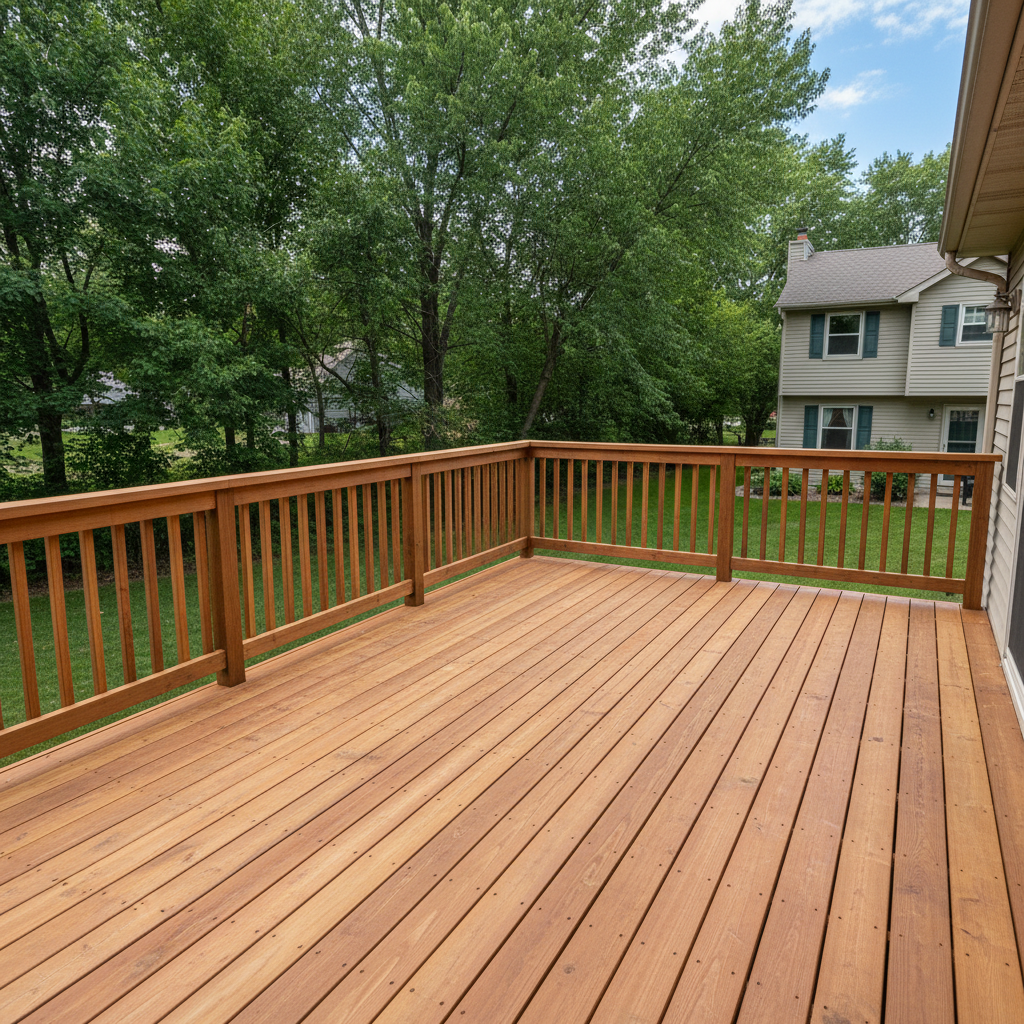
Alright, let's talk about your wooden deck. You put good money into it, and you want it to last. Up here in Bloomington, with our brutal winters and humid summers, that's not always a given without a little effort. I've seen countless decks over the years, from those built right in the 70s in neighborhoods like Penn-American, to newer ones, and the difference between a well-maintained deck and one that's been neglected is night and day. It's not just about looks, you know; it's about safety and getting the most out of your outdoor living space.
Extending Your Deck's Lifespan
The biggest thing you can do to make your deck last is protect it from the elements. Water is wood's worst enemy, especially when it freezes and thaws repeatedly, which we get plenty of here. Sun isn't far behind, drying out the wood and causing cracks. A good quality stain or sealant is your first line of defense. I'm not talking about paint; paint traps moisture and peels. You want a penetrating stain that soaks into the wood, protecting it from the inside out and letting it breathe.
You should plan on re-staining or sealing your deck every two to three years, depending on the product you use and how much sun it gets. If your deck faces south, it's definitely going to need more attention. Don't wait until the wood looks gray and faded. By then, the damage has already started. Here's a quick test: sprinkle some water on the deck. If it beads up, you're probably good. If it soaks right in, it's time to reseal.
Proper drainage is another big one. Make sure water isn't pooling on your deck or around its posts. Clear out any debris that might be trapping moisture against the wood. This is especially important around the ledger board where your deck attaches to your house. That's a critical connection, and if water gets in there and rots the wood, you've got a serious problem on your hands.
Regular Maintenance You Can Do
Daily or weekly deck maintenance isn't really a thing, but there are a few simple tasks you should do regularly to keep things in good shape:
- Clean it regularly: Sweep off leaves, dirt, and debris. This prevents mold and mildew from taking hold and keeps water from sitting in one spot.
- Wash it once a year: A good, thorough cleaning with a deck cleaner (not just bleach, which can damage wood fibers) and a stiff brush, or a very low-pressure power washer, will remove grime, algae, and mildew. Be careful with power washers, though; too much pressure can gouge the wood.
- Trim back plants: Keep bushes and trees trimmed away from your deck. They can trap moisture against the wood and block sunlight, which helps dry the deck out. Plus, critters love to hide in overgrown foliage near your home.
- Check fasteners: Give your screws and nails a once-over. If you see any popping up, tap them back down or replace them with deck screws. Loose fasteners are a sign of wood movement and can create trip hazards.
These small things really add up and make a difference in how long your deck holds up against our Minnesota seasons.
Warning Signs of Trouble
You don't need to be a deck builder to spot problems. Just keep an eye out for these things:
- Soft spots or spongy wood: This is a major red flag for rot. Step on different areas of your deck. If it feels soft or gives way, you've got an issue.
- Cracked or splintered boards: A few small cracks are normal, but large, deep cracks or widespread splintering means the wood is drying out and deteriorating.
- Loose railings or wobbly stairs: This is a safety hazard. Grab your railings and give them a good shake. If they move, they need attention. Same goes for stair treads.
- Mold, mildew, or algae: While some surface growth can be cleaned, persistent or deep-seated growth can indicate chronic moisture problems and potential rot underneath.
- Rusting fasteners or hardware: This suggests water is getting in and staying there, which can compromise structural integrity.
- Wood pulling away from the house: This is serious. If you see gaps forming where your deck meets your home, call a pro immediately.
When to Call a Professional
Look, I'm all for homeowners tackling what they can, but there are times when you really need to bring in someone with experience. If you see any of those serious warning signs I just mentioned – widespread rot, loose structural components, or anything pulling away from your house – don't mess around. These aren't just cosmetic fixes; they're safety issues. A professional can properly assess the damage, identify the root cause, and make sure any repairs are done to code and built to last.
If you're thinking about a major re-stain and your deck is really weathered, sometimes a professional cleaning and prep job makes all the difference, too. We've got the right equipment and know-how to get the wood ready without damaging it. At Skyline Deck Builders, we see it all. We can help you figure out if it's a simple fix or something that needs a bit more muscle. Your deck is an extension of your home, and keeping it safe and sound is worth the effort.